Guide
Retainers — finishing treatment is not the end
Teeth want to go back. What kinds of retainer exist, how long they have to be worn, how to look after them, and what happens if you let it slide.
Why retention is necessary
Teeth moved by orthodontics do not settle into their new positions immediately. The fibres holding them in the gum pull toward where they used to be, which makes the period right after the braces come off the point of highest relapse risk.
So the last stage of orthodontics is not removing the appliance — it is retention. Treatment that took years coming undone over a few careless months is not rare. A retainer is part of the treatment, not an optional extra.
Two broad types
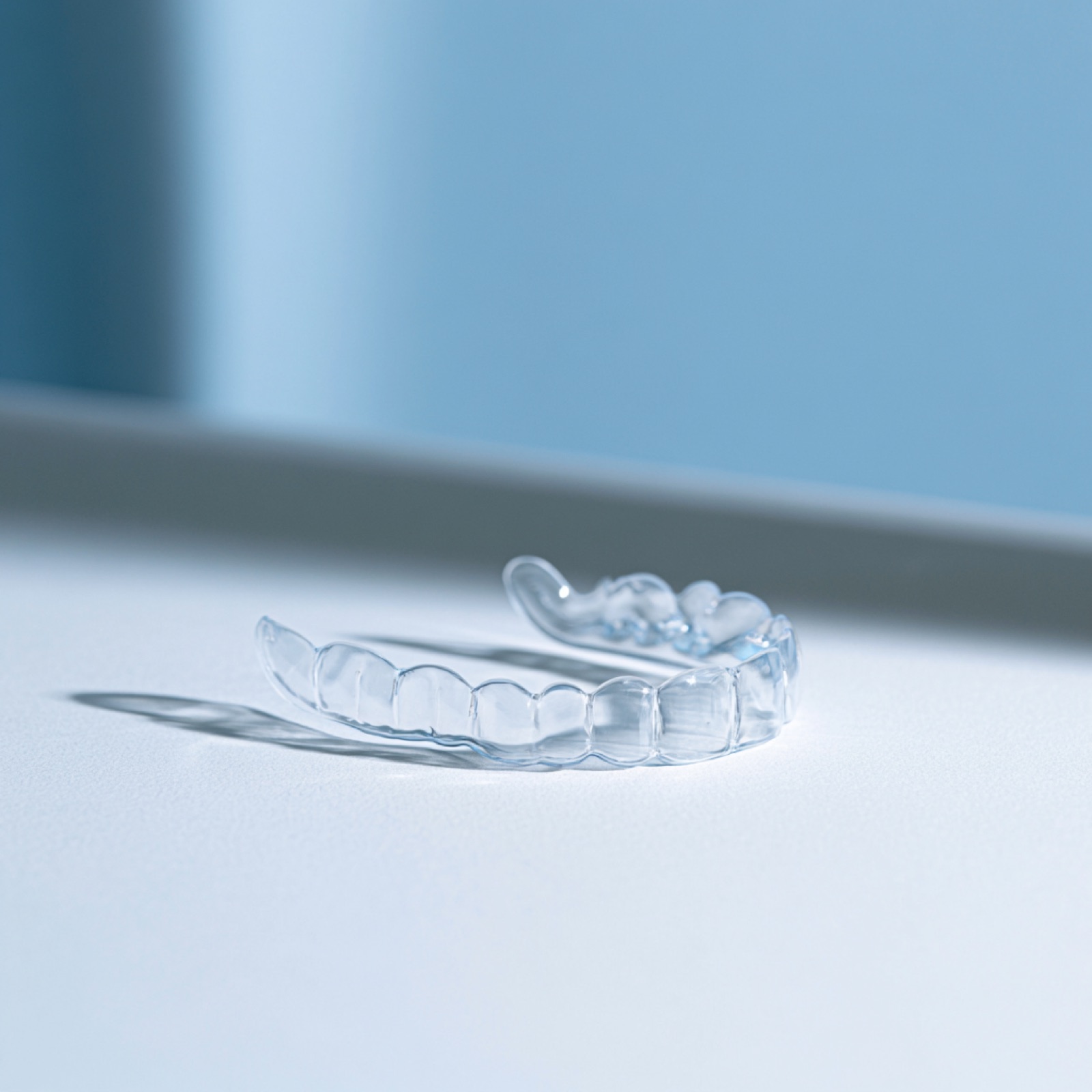
Fixed retainers are a fine wire bonded behind the front teeth. The great advantage is that you cannot forget them; the trade-off is that flossing takes more effort and a habit to match. Removable retainers — a clear tray or a wire-and-plate design — are worn at night. Easier to clean, and exactly as effective as you are consistent.
Combining them is common: a fixed wire behind the front teeth and a removable retainer at night. Ask about your own retention plan before signing the orthodontic contract, so you can compare cost and duration as a whole.
How long, and how
Typically most of the day for the first few months after the braces come off, tapering to nights only. There is no universal end point. Many clinics advise long-term night wear on the premise that teeth keep moving slightly throughout life.
Removable retainers warp in hot water, so never wash them with it, and find out in advance what a replacement costs — practically speaking, that matters. If a fixed wire comes away, do not leave it; have it re-bonded promptly.
FAQ
Frequently asked
Do I have to wear a retainer forever?
There is no fixed answer, but because teeth drift with age, many clinics advise keeping up night wear long-term. Settle the duration with your own orthodontist.
I skipped a few nights and now it feels tight. What do I do?
That tightness means the teeth have already moved. Do not force it in — call the clinic. Caught early, adjusting the retainer is usually enough.
Is the retainer included in the orthodontic fee?
It varies by clinic. Confirm inclusion, the cost by type, and the cost of a replacement if it is lost — in writing, before you sign.
How long does a bonded wire stay on?
Often for years, and sometimes indefinitely if it is causing no trouble. Learn the cleaning technique with a floss threader from the clinic.
What if my retainer breaks or gets lost?
Replace it as soon as you can. The longer the gap, the more the teeth move and the worse the new one fits. Ask in advance what a replacement costs and how long it takes.
Clear retainer or wire-and-plate?
Clear ones look natural and feel comfortable. The wire type (a Hawley) is durable and easy to adjust. If you grind your teeth, wear can change the choice — discuss it with your orthodontist.
Do I still need check-ups during retention?
Yes. Every few months at first, to check how retention is holding. Confirm the interval and whether those visits are included in the fee when you sign.
I had braces years ago and my teeth have shifted. Do I start over?
It depends how far they have moved. Limited relapse can sometimes be handled with partial treatment or a short course of aligners. Get a diagnosis first to see the extent.
Related